

 App Store
 Profile
 Security
 Sign Out
 Feeds
Feeds
 Articles
MicroStrategy: The $33B Bitcoin Experiment Built on Debt and Dilution
 StarPlatinum
Michael Saylor turned a dying company into a $33B Bitcoin vault.
A system built on leverage, dilution, and a single condition:
Bitcoin must never stop going up.
And most people don’t understand how dangerous this model is🧵
MicroStrategy holds 629,376 BTC.
They spent over $33 billion to get it.
And almost none of that came from actual business revenue.
It came from bonds, stock sales, and a never ending flow of capital from investors who believe Saylor will never sell.
The core of the strategy is simple on paper:
Raise money through convertible notes.
Raise more through ATM equity programs.
Use all of it to buy Bitcoin.
Repeat.
Every round adds more BTC.
Every round increases the risk.
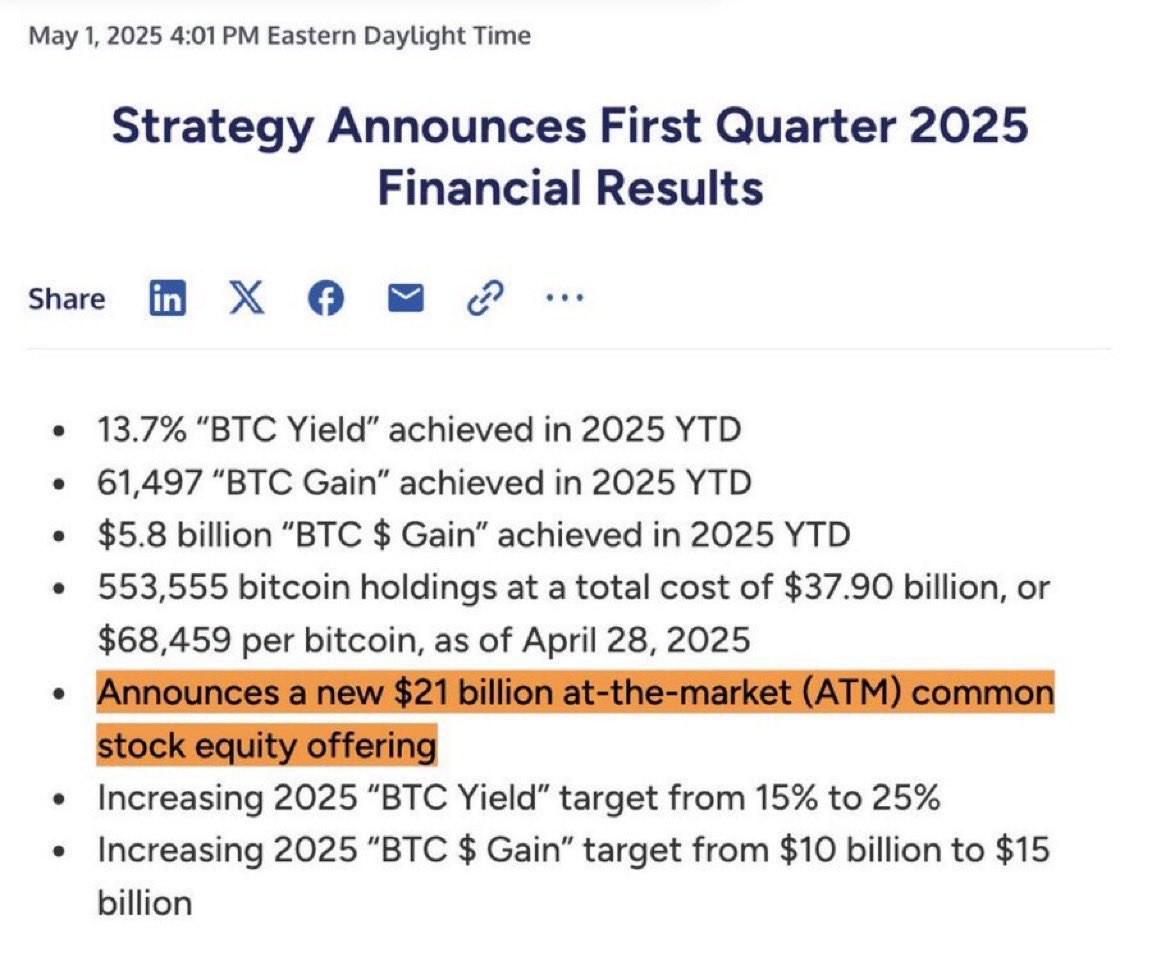
The bond deals are extreme.
MicroStrategy now has $8.2B in convertible notes.
Some have zero interest.
Some convert to stock if the price explodes.
None are backed by Bitcoin.
If the stock keeps pumping, the debt turns into shares.
If not, the debt remains.
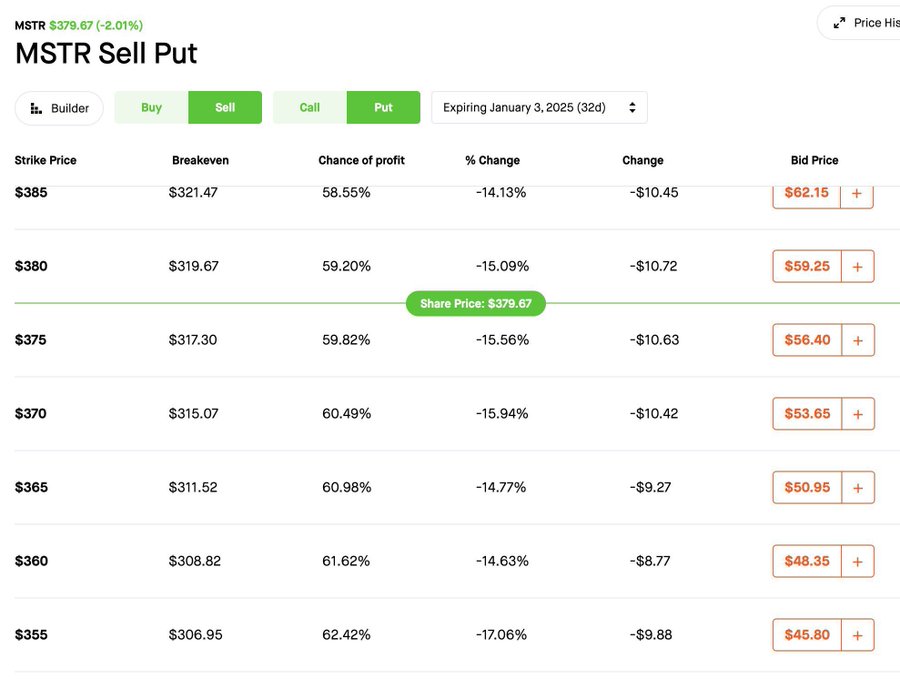
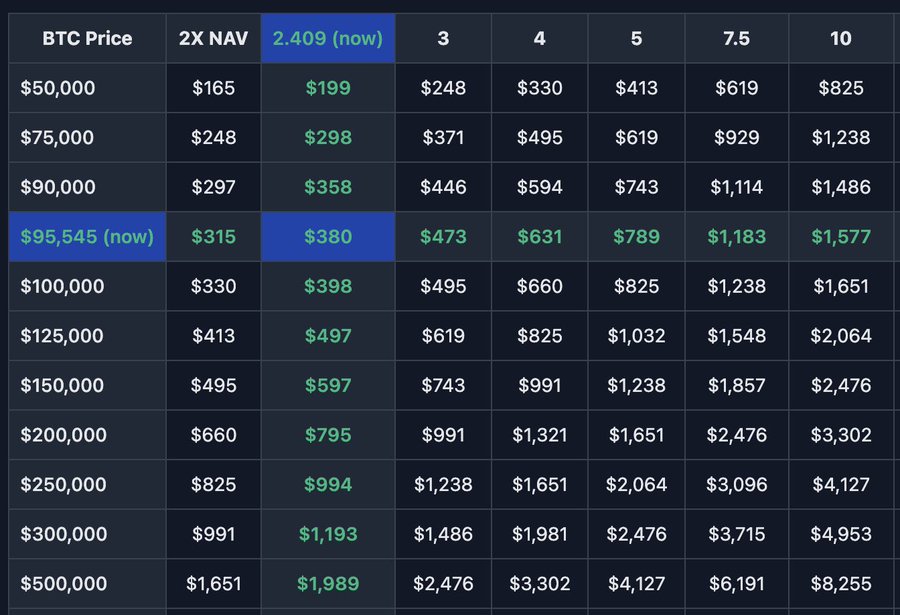
The equity sales are aggressive.
When the stock trades above its NAV, Saylor launches new ATM programs.
Hundreds of millions get raised in days.
And Bitcoin keeps flowing in.
But every sale means more dilution.
And that dilution only works as long as the hype holds.
The software business still exists but just on paper.
$463M in annual revenue.
Flat growth.
Minimal profit.
Barely enough to cover interest.
It’s a zombie company with one job:
Give Wall Street a legal wrapper to access Bitcoin.
Saylor stepped down as CEO in 2022 and became Executive Chairman.
He said it was to focus on Bitcoin strategy.
Then came the rebrand.
MicroStrategy dropped the “Micro.”
It’s now just “Strategy.”
Because the software is dead.
Only Bitcoin remains.
On-chain data shows there has only been one sale:
704 BTC for tax harvesting in 2022.
The rest has been pure accumulation.
Some wallets are in Fidelity and Anchorage.
Others are on Coinbase Prime.
Over 400,000 BTC are in cold wallets with UTXO rotation patterns.
This is a high risk experiment in financial engineering.
Debt without coupons.
Equity with constant dilution.
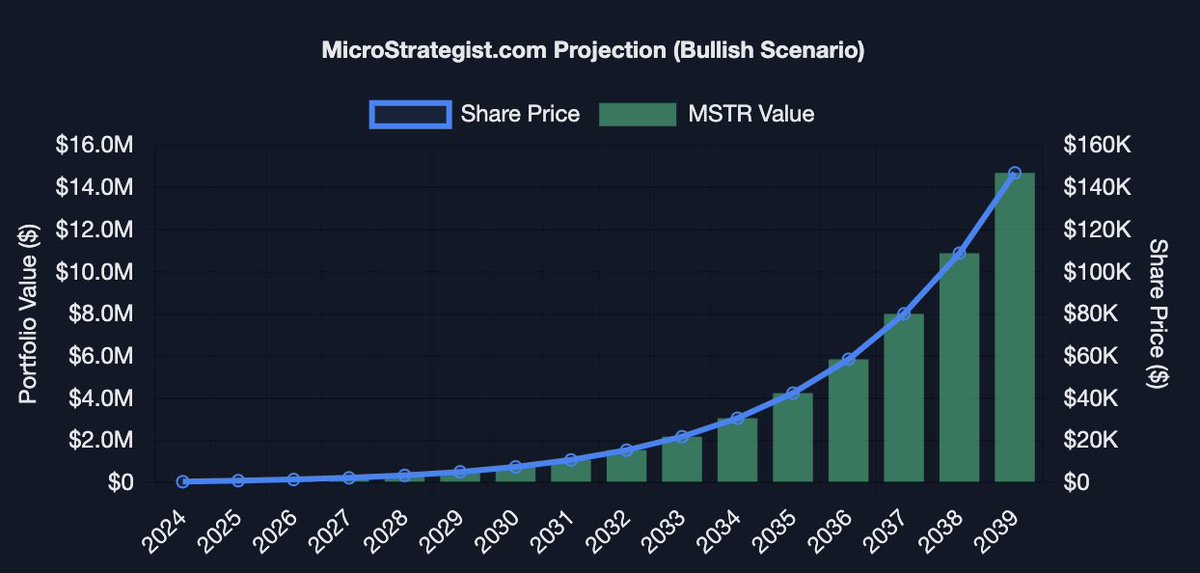
A treasury model that only survives if BTC keeps going vertical.
And every piece depends on market confidence.
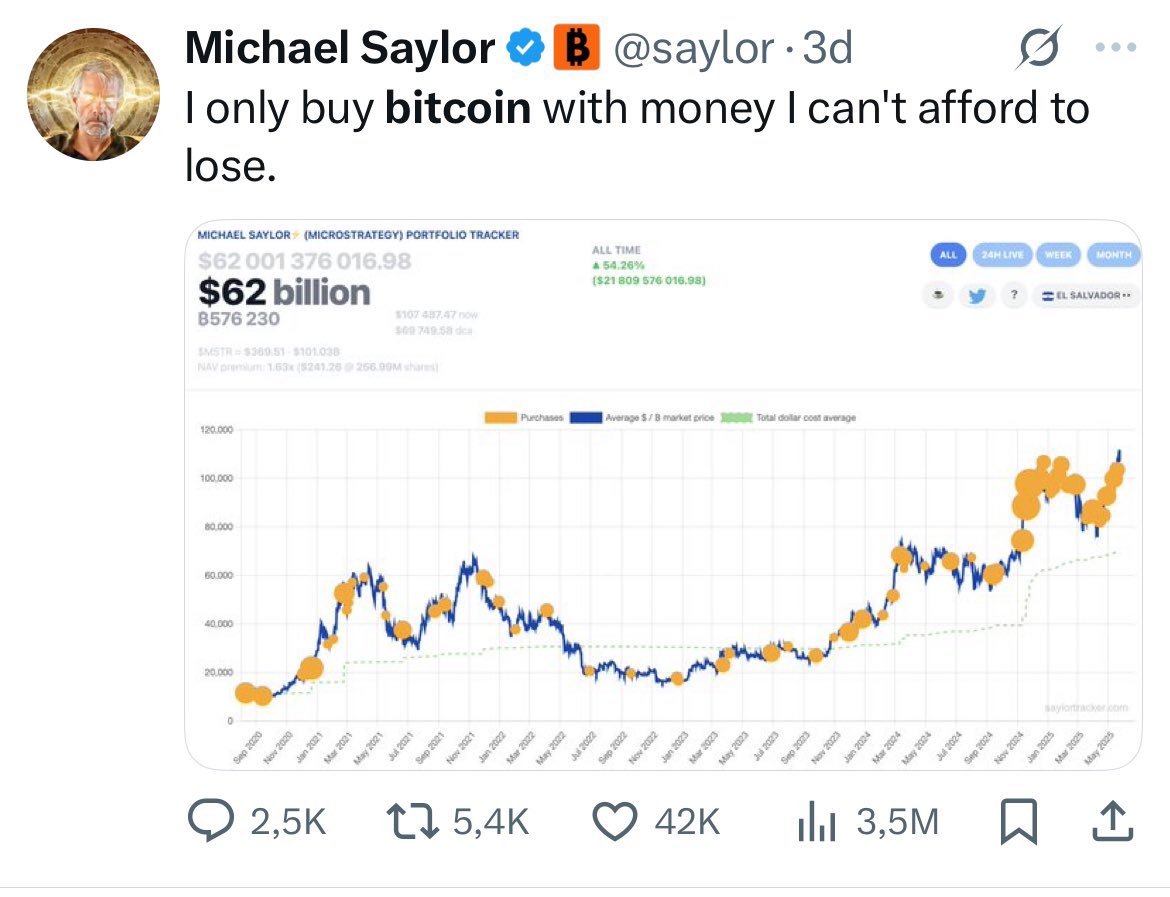
If the market crashes and Bitcoin trades below $40k for too long
The whole model could break.
And when that happens, MicroStrategy may be forced to do the one thing it promised never to do:
Sell.

 Source
 Add to Favorites
 Download image
 Share x
 Copy link
Bitcoin may enter a prolonged sideways phase between $57K and $87K as markets enter a relief period following a 52% drop from ATH. This consolidation could mirror the 2022 fractal, creating liquidity before a potential breakdown toward the $44K–$50K range.
Doctor Profit/2026.03.09

Davinci Jeremie urged people to buy $1 of Bitcoin in 2013 and became a symbol of early conviction. Years later, fame, lifestyle flexing, and token promotions sparked criticism. His journey reflects both crypto foresight and influencer-era controversy.
StarPlatinum/2026.03.04
A sweeping narrative ties Jane Street to India’s expiry-day options case, alleged 10AM Bitcoin sell patterns, Terra’s collapse, and ETF plumbing. While none prove misconduct, critics argue a common structure: move spot, monetize derivatives, keep execution opaque.
Bull Theory/2026.02.27
A controversial narrative links Jane Street, ETF mechanics, and Bitcoin’s price behavior, pointing to lawsuit allegations, 10AM volatility patterns, and derivative hedging dynamics. The discussion raises broader questions about liquidity, structure, and price discovery.
Justin Bechler/2026.02.26
A new federal lawsuit alleges Jane Street exploited non-public information tied to Terraform’s liquidity defenses, accelerating UST’s depeg and the Terra collapse. The firm denies the claims. The case may reignite debates on structure, design, and regulation.
Diana/2026.02.25
Mean reversion and on-chain models sit at levels historically linked to bottom formation after capitulation. Realized losses reached record USD values, while deviations from anchor models remain extreme. Price pain may be fading; patience remains key.
Checkmate/2026.02.25
Hot feeds
A trader profits $448K by monitoring #Binance's new listings!
2024.12.13 17:37:29
Last week, funds have flowed into #Bitcoin, #Ethereum, and #Hyperliquid.
2024.12.16 14:48:36
A $PEPE whale that had been dormant for 600 days transferred all 2.1T $PEPE($52M) to a new address.
2024.12.14 10:35:27
When Elon Musk tweeted about Moltbook, the meme coin MOLT experienced a short-term 30% price surge, hitting a new all-time high of $114 million.
2026.01.31 18:37:29
A smart #AI coin trader made $17.6M on $GOAT, $ai16z, $Fartcoin,$arc.
2025.01.05 16:05:18
A sniper earned 2,277 $ETH ($8.3M) trading $SHIRO within 18 hours!
2024.12.03 23:09:08
MoreHot Articles
How did I turn $1,000 into $30,000 with smart money?
2024.12.09
10 promising AI Agent cryptos
2024.12.05
The 30-Year-Old Entrepreneur Behind Virtual, a Multi-Million Dollar AI Agent Society
2025.01.22
10 smart traders specializing in MEMEcoin trading on Solana
2024.12.09
A trader lost $73.9K trading memecoins in just 3 minutes — a lesson for us all!
2024.12.13
What is $SPORE? Let us take you through the on-chain records to show you how it works.
2024.12.25

